
Best Pre-Cut Lace Wig for Black Women: A Guide Written for You, Not at You (2026)
Quick Answer
The best pre-cut lace wig for most Black women is a glueless HD lace wig with pre-bleached knots, a pre-plucked hairline, and around 150% density. Choose body wave for versatility, curly textures for a natural-hair look, straight hair for polished daily wear, and bob styles for low-maintenance warm-weather styling.

Why This Guide Exists
Most "best wig" articles are written generically — as if every woman has the same skin tone, the same hairline, the same styling needs, and the same relationship with her hair. They don't.
Black women make up the largest segment of the human hair wig market, yet most buying guides treat you as an afterthought — generic recommendations followed by a footnote that says "works on all skin tones." That's not good enough.
Your wig needs are specific:
- Lace visibility works differently on darker skin — transparent lace that looks invisible on a light-skinned model can look like a visible beige strip on you
- Hairline blending involves different challenges — your natural edges, baby hairs, and hair texture create a unique transition zone between wig and skin
- Texture matching matters more — the contrast between a bone-straight wig and type 4 natural hair at the edges is more dramatic than on someone with naturally straight hair
- Knot visibility is a bigger factor — dark knots on lace are more visible against darker scalp tones, making pre-bleached knots essential rather than optional
- Cultural context shapes your choices — protective styling goals, natural hair journey considerations, and edge preservation aren't footnotes, they're primary decision factors
This guide addresses all of these directly.
Best Pre-Cut Lace Wigs by Need
For Protective Styling: 6x5 Body Wave Glueless
Price: $130–$165 Best spec: 150% density, 14–16", Natural Black (1B)
If your primary reason for wearing a wig is protecting your natural hair while it grows, recovers, or simply gets a break from daily manipulation — body wave glueless is the gold standard.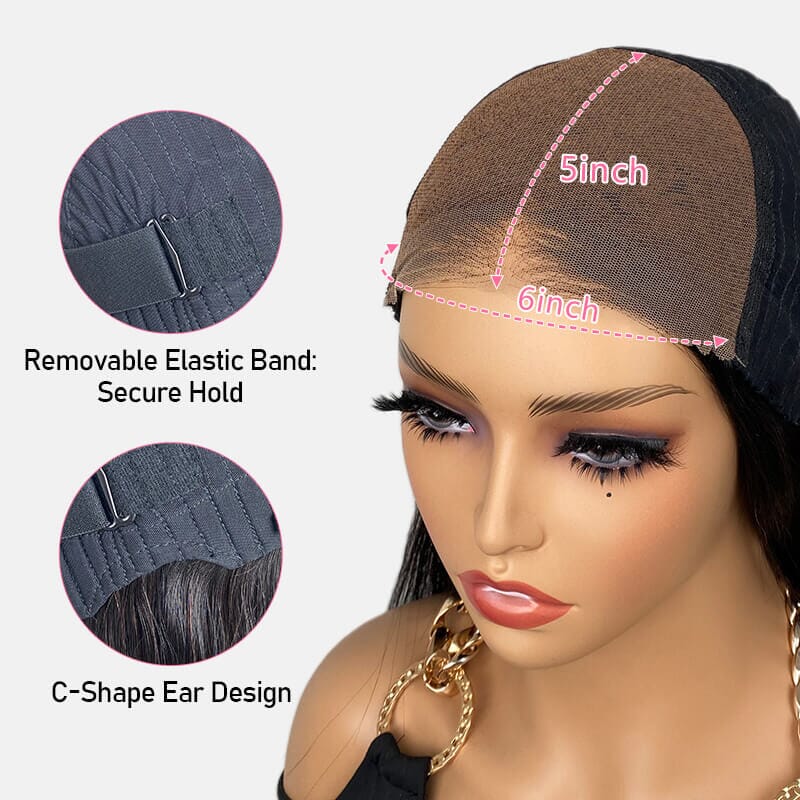
Why it's the best protective option:
The entire protective styling philosophy is about reducing manipulation and tension on your natural hair. A glueless wig with adjustable straps and combs creates zero tension on your hairline. No glue pulling on your edges. No adhesive chemicals touching your skin. No 15-minute removal process that risks ripping out baby hairs.
You can install it in 5 minutes, wear it all day, remove it in 10 seconds, and your natural hair underneath is completely untouched. Do this for 6–12 months and many women see significant natural hair growth and edge restoration — because the hair is finally free from daily heat, styling, and environmental damage.
Body wave specifically because the texture creates enough visual interest to look styled without requiring any heat tools. You get the "I just came from the salon" look every morning with zero flat irons, zero curling wands, and zero heat damage to the wig itself (which extends its lifespan).
Pairing with your natural hair routine: Continue your natural hair care under the wig — moisturize your cornrows or braids every 3–4 days, keep your scalp clean, and give your natural hair a full wash and deep condition every 2 weeks when you wash the wig. The wig protects your hair from the outside world, but your natural hair still needs internal care.
[Shop Body Wave Protective Style →]
For Natural Hair Aesthetic: 6x5 Curly Glueless
Price: $145–$180 Best spec: 150% density, 12–16", Natural Black (1B)
If your goal is "looks exactly like my natural hair, just longer/thicker/more defined" — curly is your texture.

Why curly works so well for Black women specifically:
Curly wig textures (3B–4A pattern) are the closest match to the natural hair textures most Black women have. This means:
- Edge blending is effortless: Your natural baby hairs and the wig's curly texture move in the same direction and have similar bounce. There's no jarring contrast between your edges and the wig hair.
- The lace disappears into the texture: Curly hair at the hairline creates shadows and dimension that make the lace edge essentially invisible. Straight and body wave expose the lace edge more because the hair lies flatter.
- No one questions it: A Black woman with curly hair looks natural by default. Nobody examines curly hair as closely as they examine straight or wavy hair, because curly is expected. This social reality works in your favor.
Choosing the right curl pattern:
| Your Natural Texture | Best Wig Curl Match | Why |
|---|---|---|
| 3A–3B | Loose curly | Closest match to your edge texture |
| 3C–4A | Medium curly | Blends naturally with your hairline |
| 4B–4C | Deep curly or kinky curly | Minimizes texture contrast at edges |
The sleeper benefit: Curly wigs require the least heat styling of any texture. You literally never need a flat iron or curling wand. Wash, condition, apply curl cream, air dry, done. This zero-heat approach extends the wig's lifespan by 2–3 months compared to textures that need regular heat styling.
[Shop Curly Natural Look →]
For Versatile Styling: 6x5 Straight Glueless
Price: $120–$155 Best spec: 150% density, 14–18", Natural Black (1B)
If you want the widest range of styling options — flat iron waves one day, sleek straight the next, ponytail on the weekend — straight texture gives you the most flexibility because it's the easiest base to transform.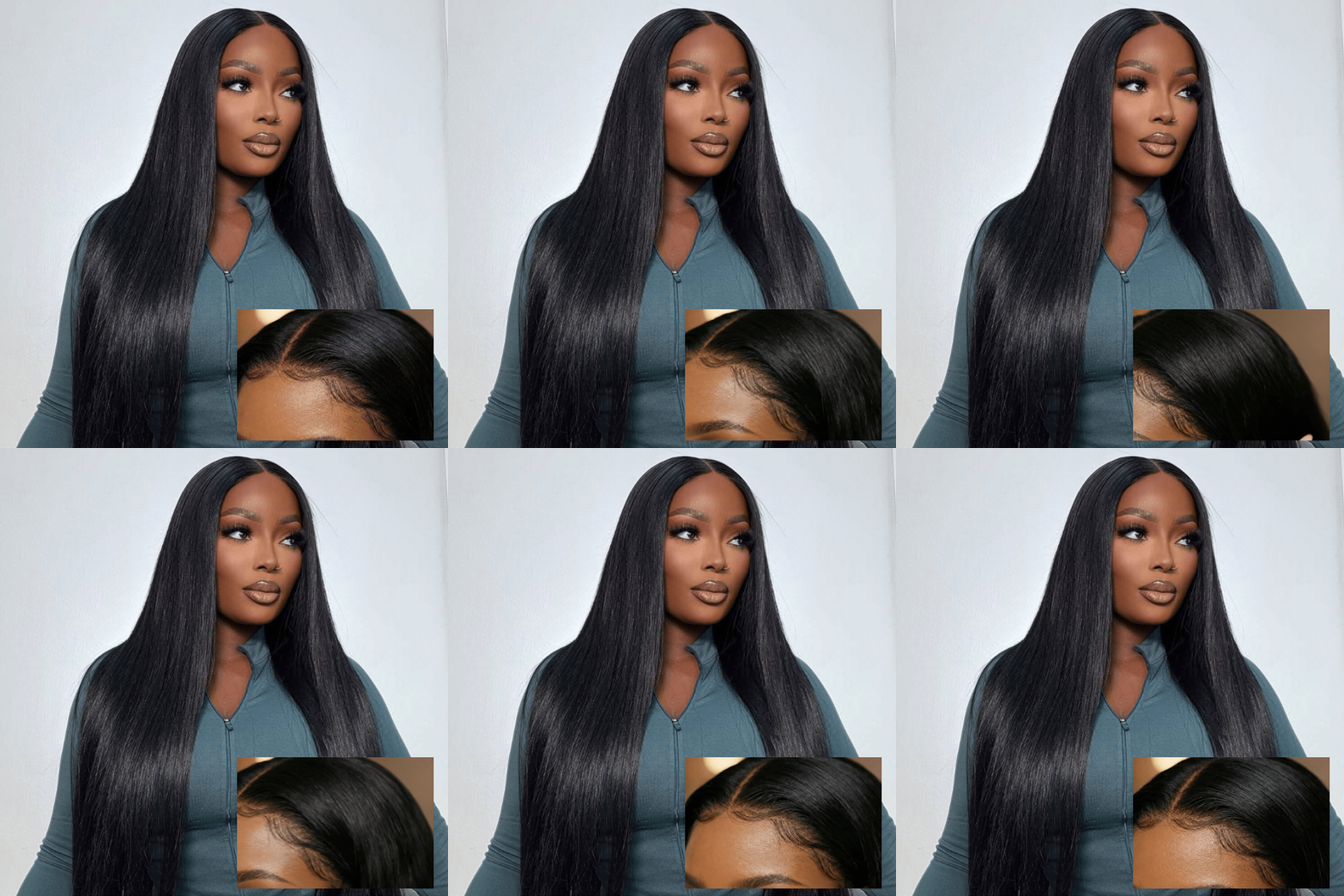
Why some Black women prefer straight:
Not every Black woman wants her wig to match her natural texture. Many want a wig that gives them a look they can't easily achieve with their natural hair — and bone-straight, flowing hair is often that look. There's nothing wrong with this choice, despite what some corners of the natural hair community suggest.
Straight wigs also offer practical advantages in professional environments where, fairly or unfairly, certain textures receive different treatment. A straight wig gives you a polished, "boardroom-ready" look with 3 minutes of effort.
The edge-blending challenge (and solution):
The biggest challenge with straight wigs on Black women is the texture contrast at the hairline. Your natural edges are likely curly or coily (type 3–4), and the wig hair is bone straight. Where they meet, the transition is visible.
Solutions:
- Edge control gel: Apply to your natural baby hairs to smooth them in the same direction as the wig hair. This creates a visual bridge between your textured edges and the straight wig.
- Flat iron your edges: Use a very small flat iron on your natural baby hairs to temporarily straighten them to match the wig. This only takes 30 seconds per side but makes a dramatic difference. The heat is minimal (tiny surface area, brief contact) and your edges recover their natural texture after washing.
- Strategic baby hair placement: Pull out slightly more wig baby hairs on the sides where your natural edges are visible. The wig baby hairs (which are straight) cover and blend with your natural edges underneath.
[Shop Straight Versatile →]
For Maximum Volume: 6x5 Deep Wave Glueless
Price: $140–$175 Best spec: 150% density, 14–18", Natural Black (1B)
Deep wave on Black women is a statement. The tight, defined wave pattern creates dramatic volume that moves and bounces with every step. At 150% density, deep wave looks as full as 180% density in other textures — giving you the visual impact of a premium wig at a mid-range price.
Why deep wave works on darker skin tones:
The tight wave pattern creates deep shadows between each wave. On darker skin, these shadows create a rich, dimensional look that photographs exceptionally well. This is why deep wave is the most popular texture among Black content creators and influencers — it's dramatic on camera.
The maintenance reality: Deep wave is the highest-maintenance texture on this list. The tight wave pattern tangles more easily (especially at the nape), needs more product to stay defined, and takes the longest to air dry. Budget an extra 5–10 minutes of daily care compared to body wave, and deep condition every 3 weeks instead of monthly.
Who should choose this: Women who want statement hair and are willing to invest the extra care time. If low maintenance is your priority, body wave or curly are better choices.
[Shop Deep Wave Volume →]
For Budget-Conscious Buyers: Pre-Cut Body Wave Bob
Price: $100–$140 Best spec: 150% density, 10–14", Natural Black (1B)
The bob is the entry point for any Black woman who wants to try a high-quality wig without a high financial commitment. At $100–$140, it delivers the same HD lace, the same glueless construction, and the same human hair quality as longer wigs — just in a shorter, lighter, lower-maintenance package.
Why bobs work exceptionally well on Black women:
Black women pioneered the bob wig aesthetic — from the classic blunt bob to the asymmetric cut. It's a look that flatters round, oval, heart, and square face shapes. And because bobs are shorter, the waves hold their pattern all day without gravity pulling them flat.
The shorter length also means less weight on your head, which matters for comfort during all-day wear — especially in summer months when longer wigs can feel hot.
Perfect as a first wig: If you've never worn a wig before and you're not sure whether wig-wearing is for you, a $120 bob is the lowest-risk way to find out. It installs faster (less hair to manage), maintains easier (less to detangle), and costs less to replace if you damage it while learning. See our [first-time buyer's guide →] for the complete beginner strategy.
[Shop Bob Wigs →]
Skin Tone and Lace: The Matching Guide Nobody Gives You
Most wig sellers describe their lace as "transparent" or "HD" and leave it at that. But within HD lace, there are shade variations that matter for darker skin tones:
How to Check Your Lace Match Before Full Install
- Take the wig out of the packaging
- Hold the lace area against your forehead
- Stand near a window (natural light)
- Look in a mirror
What you want to see: The lace virtually disappears and you can't tell where it starts. The area covered by lace looks the same as the uncovered skin around it.
What means you need to tint: A visible difference between the lace area and your surrounding skin — either lighter (most common on dark skin) or slightly different in undertone (pink lace against warm brown skin, for example).
Tinting Guide by Skin Tone
| Skin Depth | Tinting Method | Duration | Notes |
|---|---|---|---|
| Light-medium brown | Regular black tea, 2 bags | 5–10 minutes | Check frequently, easy to over-tint |
| Medium-dark brown | Strong black tea, 3 bags | 10–15 minutes | The most common range for Black women |
| Dark brown | Dark roast coffee | 10–20 minutes | Coffee provides warmer, darker tones than tea |
| Deep/espresso | Espresso coffee + dash of fabric dye | 15–25 minutes | For the deepest skin tones, coffee alone may not be enough |
Undertone matching: Your skin has an undertone (warm/golden, neutral, cool/red) that the tint should approximately match. Black tea produces neutral-to-warm tones. Coffee produces warm tones. For cool/red undertones, add a single drop of red food coloring to either solution.
Pro tip: Tint slightly darker than you think you need. Lace lightens as it dries, and it always appears lighter in person than it looked wet. You can always wash out some tint if it's too dark, but under-tinting means doing the whole process again.
Edge Care: Protecting What Matters Most
For many Black women, edges are precious — and for good reason. Traction alopecia from tight hairstyles, weaves, and yes, wig glue, has affected millions. If your edges are thinning, recovering, or simply something you want to protect, your wig choice and installation method matter enormously.
Why Glueless Is Non-Negotiable for Edge Protection
Every application and removal of wig glue creates micro-tension on the hair follicles along your hairline. Over months and years, this repeated stress causes:
- Progressive thinning at the temples and front hairline
- Permanent follicle damage that prevents regrowth
- Scarring alopecia in severe cases
Glueless pre-cut wigs eliminate this risk entirely. The wig is held by adjustable straps and combs that secure to your braids or wig cap — not to your skin. Your edges are never touched, pulled, or chemically stressed.
If Your Edges Are Already Thin
Wig adjustment: Pluck the wig's front hairline more aggressively than usual, matching the sparseness of your natural edges. A dramatic density jump from thin edges to thick wig hair is the number one tell — gradient matching eliminates it.
Strategic baby hairs: Use the wig's own baby hairs (pre-plucked from the front edge) to cover any gaps in your natural edges. Lay them with light edge control in the direction that best conceals thin areas. The wig baby hairs act as a natural-looking curtain over your edges.
Edge growth support: While wearing glueless wigs, apply castor oil or a growth serum to your natural edges nightly. The wig protects them from external damage during the day, and the treatment supports regrowth at night. Many women see visible edge recovery within 3–6 months of this dual approach.
Color Options That Complement Dark Skin
While natural black (1B) is the safest default, Black women have a wider range of flattering color options than most guides acknowledge:
Colors That Work Beautifully on Dark Skin
| Color | Effect | Best For |
|---|---|---|
| 1B (Natural Black) | Classic, versatile, lowest maintenance | Everyday, professional |
| #2 (Dark Brown) | Softer than black, adds warmth | Anyone who finds 1B too harsh |
| #4 (Medium Brown) | Warm, dimensional | Warm undertones, fall/winter |
| #30 (Auburn) | Rich, eye-catching warmth | Warm undertones, statement looks |
| #33 (Dark Auburn) | Subtle richness without being "red" | Professional + personality |
| Burgundy (99J) | Bold, dramatic | Night out, events, creative expression |
| Honey Blonde (27) | Striking contrast, high-fashion | Content creators, bold personalities |
Colors to Approach with Caution
| Color | Challenge | Consideration |
|---|---|---|
| Platinum blonde (613) | Extreme contrast with dark skin can look artificial | Requires makeup adjustment and confidence |
| Ash tones | Cool ash can clash with warm skin undertones | Test before committing |
| Pastel colors | Often read as costume-like on any skin tone | Best for very short-term wear |
First-wig advice: Start with 1B or #2. Once you're comfortable with wig wearing and understand how color interacts with your specific skin tone, explore #30 or #33 on your second or third wig. Save bold colors (burgundy, blonde) for when you have experience and confidence.
The eyebrow rule applies here too: Whatever wig color you choose, it should be within 1–2 shades of your eyebrow color for the most natural look. If you choose a wig that's dramatically different from your brows, use brow tinting products to bridge the gap.
Recommended AliGrace Options
Use this section to match your buying goal with the right pre-cut or glueless wig type.
| Goal | Recommended option | Best for |
|---|---|---|
| Beginner-friendly install | 6x5 Wear & Go Glueless Wigs | Fast daily wear, no glue, no lace cutting. |
| Natural hairline on deeper skin tones | HD Lace Wigs | Better lace blending and less visible beige cast. |
| Protective styling with soft movement | Body Wave Wigs | Versatile texture with less daily styling effort. |
| Natural texture match | Curly or Kinky Curly Wigs | Better blend with textured edges and natural-hair aesthetics. |
Frequently Asked Questions
Do I absolutely need HD lace, or can transparent lace work on dark skin?
HD lace is strongly recommended. Transparent lace can work on dark skin if you're willing to invest significant effort in tinting, but it will never achieve the same level of invisibility that HD lace provides naturally. The thicker mesh of transparent lace is more visible against darker skin even when the color is corrected.
How do I blend my 4C edges with a straight or body wave wig?
Three options: edge control gel to smooth your natural edges flat, a small flat iron to temporarily straighten just the baby hairs (30 seconds per side), or pulling extra wig baby hairs forward to cover your natural edges. Most women use a combination of the first and third options.
Will a wig help my edges grow back?
A glueless wig can create the conditions for edge recovery by eliminating tension and chemical exposure. Combined with nightly edge treatment (castor oil, growth serum), many women see visible improvement in 3–6 months. However, if follicles are permanently scarred (from severe traction alopecia), regrowth may be limited. A dermatologist can assess your specific situation.
What cap color should I choose?
Match your cap to your skin tone, not your hair color. A black wig cap on dark skin works well. On medium-brown skin, a dark brown cap is better. The cap sits behind the lace, and if it shows through (which it can along the parting), it should blend with your skin, not contrast against it.
Is 150% density enough, or do Black women need more?
150% is enough for most women and most situations. The myth that Black women need 180%+ density comes from two places: Instagram content creators who use high density for camera impact, and wig sellers who make more money on higher-density wigs. In real life, at conversation distance, 150% looks like naturally healthy, medium-thick hair on any skin tone.
Can I wear a wig over my locs?
Yes, with modifications. Loc-friendly wig caps are available that accommodate the bulk of locs. You may need a slightly larger cap size, and some women find that a braided wig cap (designed for voluminous hair underneath) works better than a standard mesh cap. The wig should sit securely without compressing your locs.
How do I choose between a closure and a frontal as a Black woman?
A closure (4x4 or 6x5) is ideal for daily wear — glueless, fast install, lower maintenance. A frontal (13x4) is better for pulled-back styles and deep side parts but requires glue. For edge protection, a closure/glueless is always the safer choice. See our [6x5 vs 13x4 comparison →] for the full breakdown.
Are there wigs designed specifically for Black women?
Not in a technical sense — the same HD lace, human hair, and construction work for all women. But some brands (including ours) design their pre-plucked hairlines, baby hair patterns, and texture options specifically with Black customers in mind, because Black women represent the majority of their customer base. Look for brands with a large base of Black customer reviews with photos — this tells you the brand understands their primary customer.


